When a Tree Becomes a Risk: A Nashville, Tennessee Homeowner Guide to Safe Removal Decisions
Key Takeaways
- Tree risk depends on the tree's condition, location, and nearby people or property.
- New leaning, major cracks, root damage, dead limbs, and fungal growth deserve closer attention.
- Storm-damaged trees may have hidden root or structural problems even when they remain standing.
- Pruning, treatment, support, monitoring, or removal may be appropriate depending on the situation.
- Avoid climbing, cutting, or working beneath unstable trees or hanging limbs.
- Trees near homes, roads, walkways, or power lines may require professional assessment.
- Before removal, review local requirements and clarify cleanup, stump, and access arrangements.
- Replanting should account for mature tree size, available space, sunlight, drainage, and utility lines.
Mature trees add shade, character, and habitat to Nashville neighborhoods. Still, changing weather, aging wood, construction activity, and crowded residential lots can sometimes turn a healthy-looking tree into a safety concern. The right response depends on the tree's condition, its location, and what could be affected if a limb or trunk fails. Homeowners considering tree removal should avoid making the decision based on appearance alone. A sparse canopy or a few fallen twigs may call for routine care, while a new lean, a major trunk crack, or damaged roots near a home may require prompt attention. For guidance on residential tree services in Nashville, resources such as professional tree removal services can provide expert assessments when needed.
Why Trees Become Property Risks
A tree becomes hazardous when it has a significant risk of failure, and there is a target within reach, such as a house, driveway, sidewalk, vehicle, play area, or utility line. Decay, disease, weak branch connections, storm injury, and root damage can all affect that likelihood. A defect in an open part of a large yard may deserve monitoring, while the same defect above a frequently used walkway may deserve faster action. Removal is not the only outcome. In some cases, careful pruning, treatment, structural support, or periodic observation can address the concern while preserving the tree. When a tree must come down, planning for what remains matters too. A tree stump grinding may be worth considering when the space will become lawn, a garden bed, a path, or a site for future planting.
Warning Signs That Deserve Attention
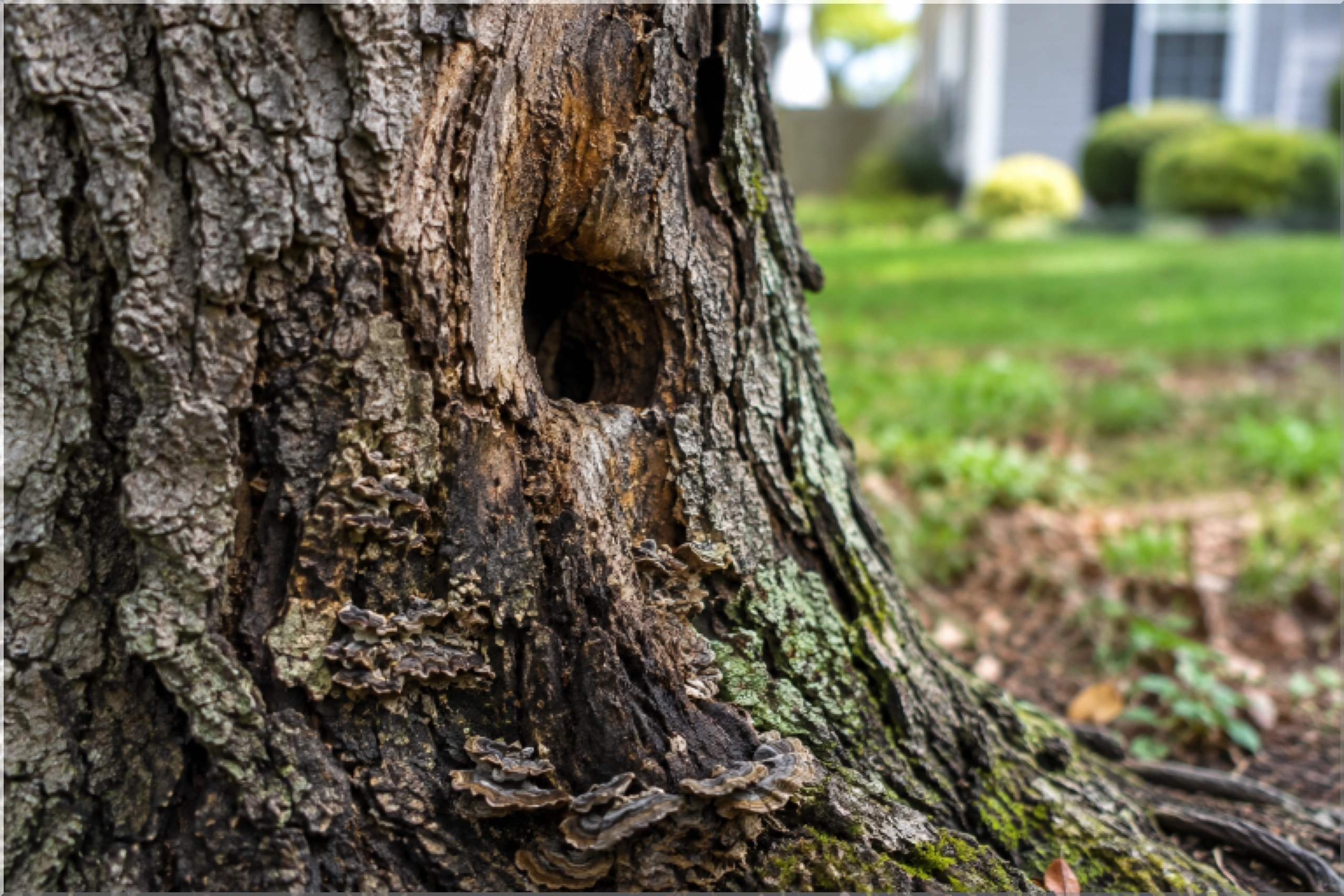
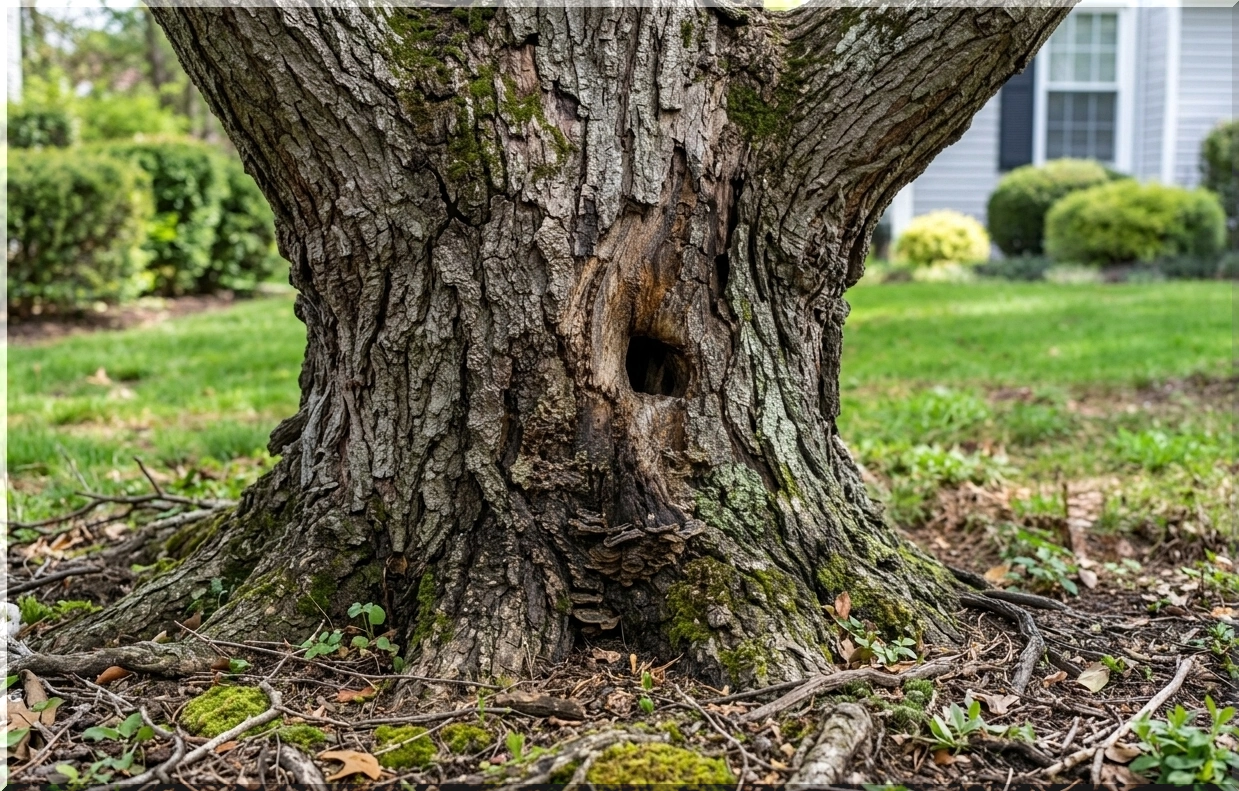
Visible symptoms do not automatically mean a tree must be removed, but they are reasons to look more closely. A university guide to recognizing hazardous trees identifies cracks, cavities, fungal growth, dead limbs, soil fissures, and leaning trunks as conditions that can indicate a problem.
- Large dead, broken, or hanging branches.
- Deep cracks in the trunk or where major limbs join.
- Soft wood, open cavities, loose bark, or large wounds.
- Mushrooms or shelf-like fungal growth at the trunk base.
- Multiple trunks joined by a narrow, weak-looking connection.
- A suddenly thinning crown or unexpected loss of leaves.
- Exposed, broken, lifted, or recently cut roots.
Leaning Trees, Roots, and Soil Changes
Some trees develop a stable, natural lean over many years. A new or worsening lean is different, especially after heavy rain, strong wind, excavation, or changes to drainage. Fresh soil cracks, raised soil on one side of the trunk, and roots pulling upward can indicate that the anchoring system has been disturbed. Roots are responsible for more than collecting water and nutrients. They also help hold the tree in place. Digging for utilities, installing hardscape, trenching, filling soil around the trunk, or cutting large roots can affect stability long after the work is finished. Do not push, brace, climb, or make cuts on a leaning tree, particularly when it points toward a structure or a place people use.
Storm Damage and Hidden Hazards
Nashville thunderstorms can leave obvious damage, including broken limbs and split trunks, but a tree that remains upright may still have weakened roots or internal injuries. University guidance on assessing storm-damaged trees emphasizes prioritizing trees that could strike people or property and using trained professionals for dangerous work near targets or electrical utilities.
- Keep people and pets out of the damaged area.
- Look from a safe distance for downed wires, hanging limbs, and blocked access.
- Photograph visible damage without standing beneath the canopy.
- Report trees contacting power lines to the utility provider.
- Do not use a ladder or chainsaw to reach suspended or elevated branches.
Removal, Pruning, Treatment, or Monitoring
The best option should fit the actual condition rather than follow a one-size-fits-all rule.
- Pruning may fit: Dead, damaged, or poorly placed branches where the trunk and root system remain sound.
- Treatment may fit: Certain pest, disease, or soil concerns when the tree remains structurally stable.
- Support systems may fit: Selected structural defects when a qualified professional recommends cabling or bracing.
- Monitoring may fit: A minor, stable defect with no nearby target and no signs of recent change.
- Removal may fit: A dead tree, severe trunk failure, major root instability, or a condition that cannot be managed safely near people or property.
When to Request an Assessment
Request a professional assessment when a tree develops a new lean, has a deep split or cavity, loses a large limb, shows root lifting, or stands close to a building, road, or power line. It is also sensible to ask for help when the correct response is uncertain. A useful question is: Can the tree be retained safely? How urgent is the concern? Which defect creates the greatest risk? What work is recommended now, and what should be monitored over time?
Preparing for Removal and the Aftermath
Before work begins, confirm ownership and review applicable local rules, neighborhood requirements, and utility considerations. Move vehicles, outdoor furniture, tools, toys, and other items away from the work area. Clarify how branches, logs, wood chips, cleanup, and the stump will be handled, and expect temporary access limits around the property. After removal, inspect the area for surface roots, compacted soil, drainage changes, and damaged landscape features. If replanting, select a tree based on mature size, available soil space, sun exposure, and its distance from foundations and overhead lines.
Common Questions About Tree Removal Decisions
Does every leaning tree need to be removed?
No. A long-standing lean can be stable. A sudden lean, lifted roots, fresh ground cracks, or a lean toward a home or walkway creates more concern.
Are mushrooms at the base always a sign that the tree will fall?
No. Fungal growth does not guarantee failure, but it can indicate decay in roots or wood and warrants closer evaluation.
Can a hollow trunk be saved?
Sometimes. The decision depends on the cavity's location and size, the amount of sound wood remaining, the tree's overall condition, and what sits within its potential fall zone.
A Safer Way to Make the Call
Tree decisions are safest when based on condition, location, and likely consequences rather than fear or guesswork. A careful review may show that pruning or monitoring is enough. When serious defects or nearby targets are involved, timely removal can reduce the chance of harm to people and property.
Conclusion
Managing tree risks in Nashville requires attention to both the tree itself and the surrounding property. Warning signs such as new leaning, major cracks, damaged roots, dead branches, or signs of decay should be evaluated in context, especially when a tree is close to a home, driveway, walkway, or utility line. Not every concern requires removal, as pruning, treatment, support, or monitoring may sometimes be appropriate. However, storm-damaged or unstable trees can present hazards that are not suitable for DIY work. By documenting changes, regularly maintaining trees, arranging professional assessments when needed, and carefully planning for removal or replanting, homeowners can make more informed decisions while protecting people, property, and the long-term character of their landscape.
- Add new comment
- 3 views