Ortsan Mini House Turns a 13-Foot Camper Into a Tiny Off-Grid Cabin
Small campers usually ask for a bargain with your back, your knees, and your patience. The Ortsan Mini House tries a cheekier deal: tow something compact, press a button, and watch it grow into a livable tiny house camper with room for actual breathing.
Why the Ortsan Mini House Is Getting Attention
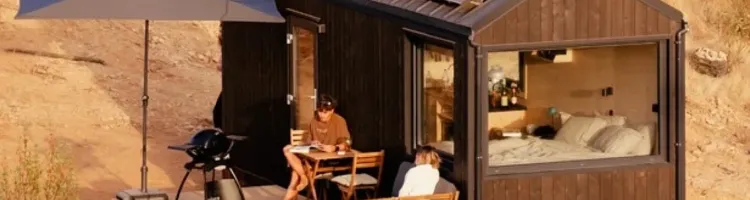
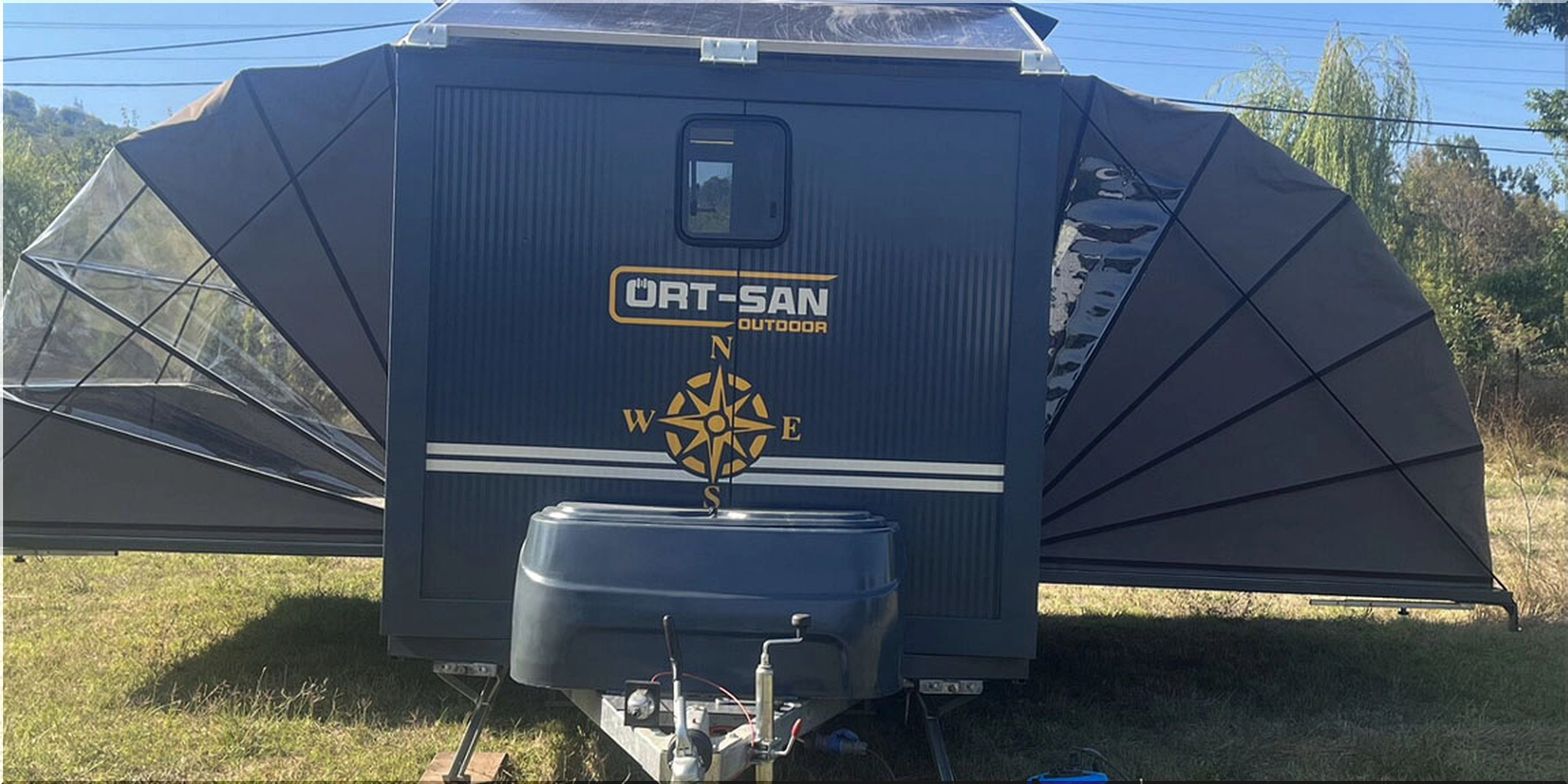
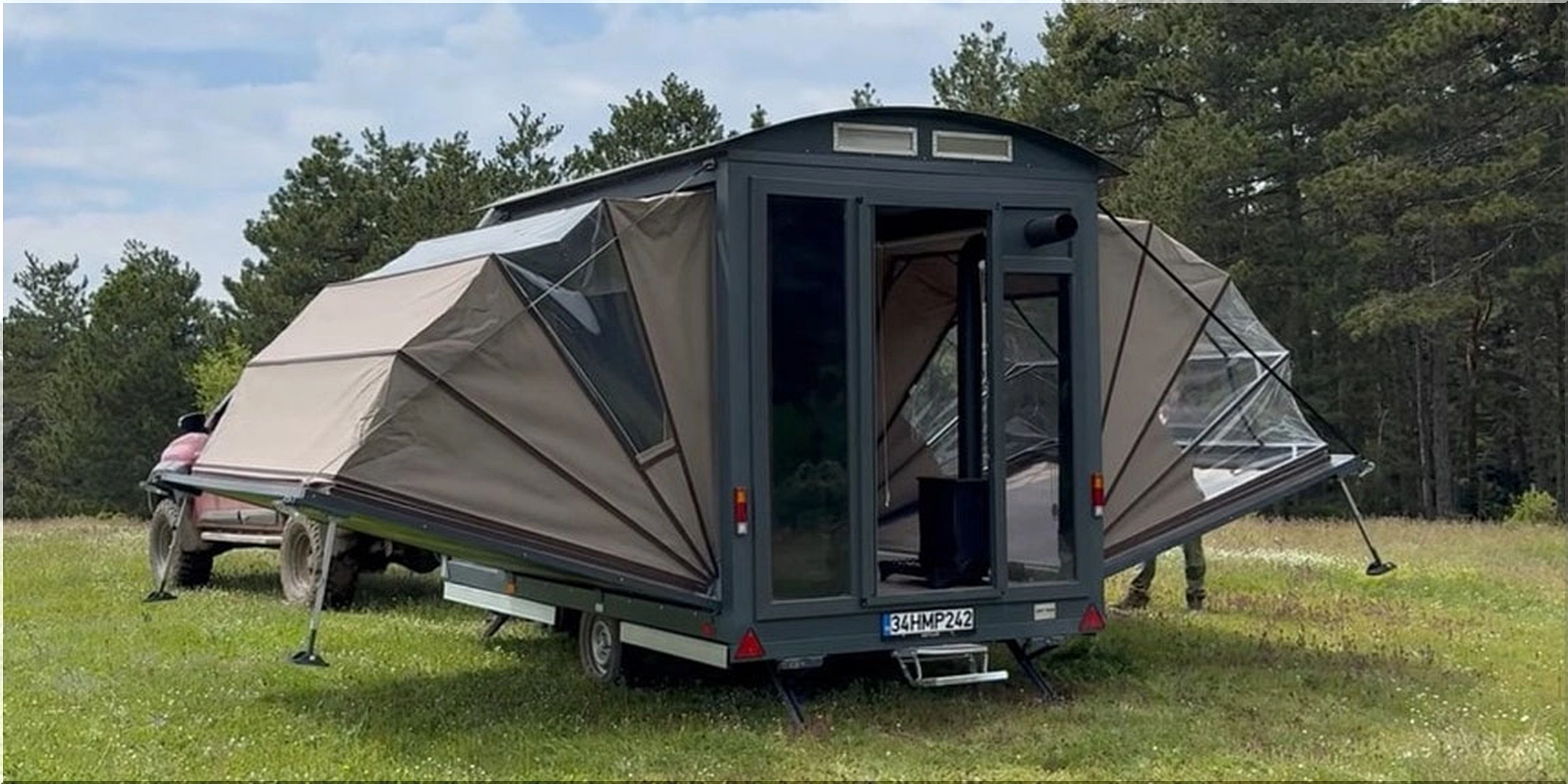
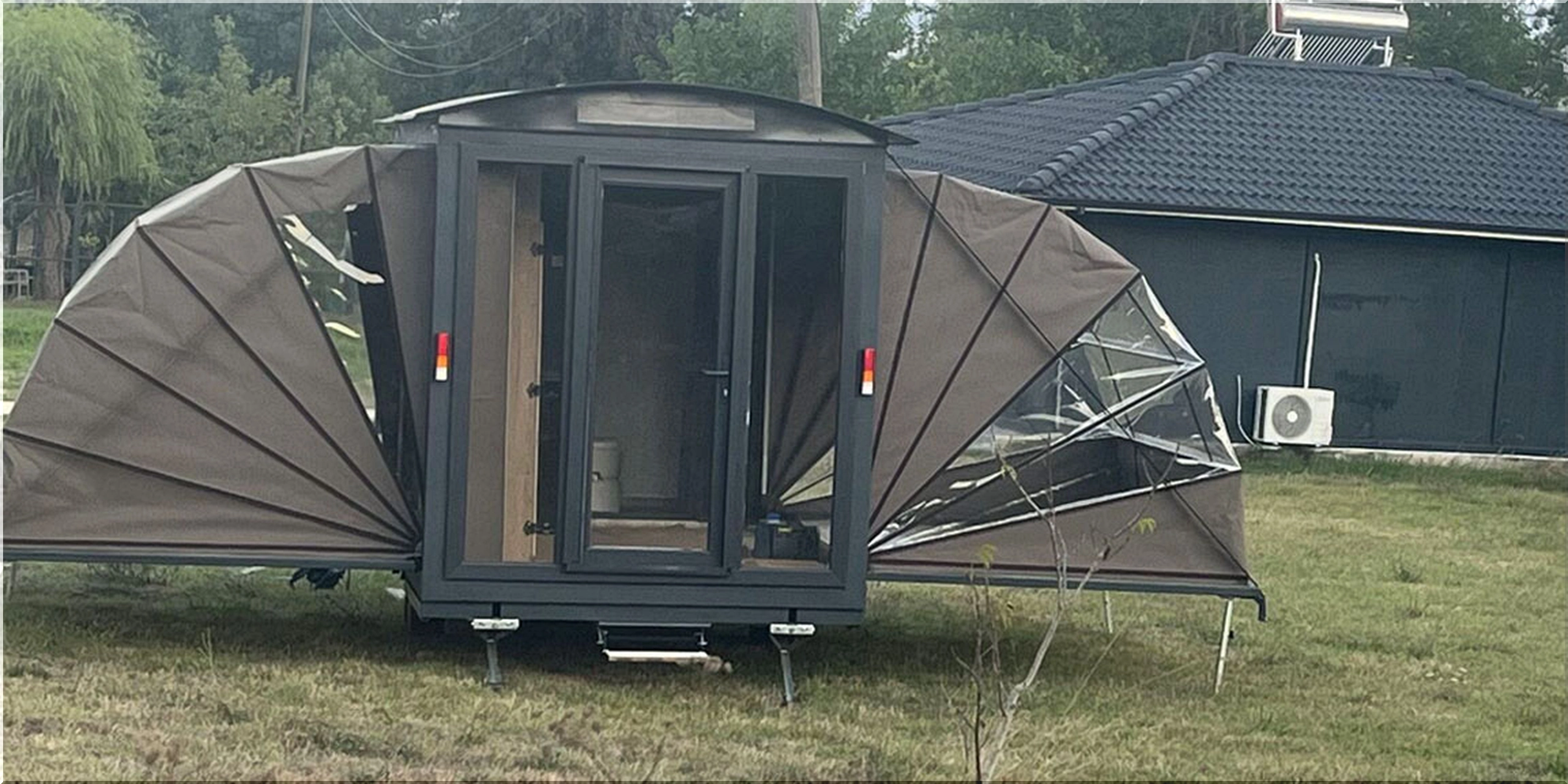
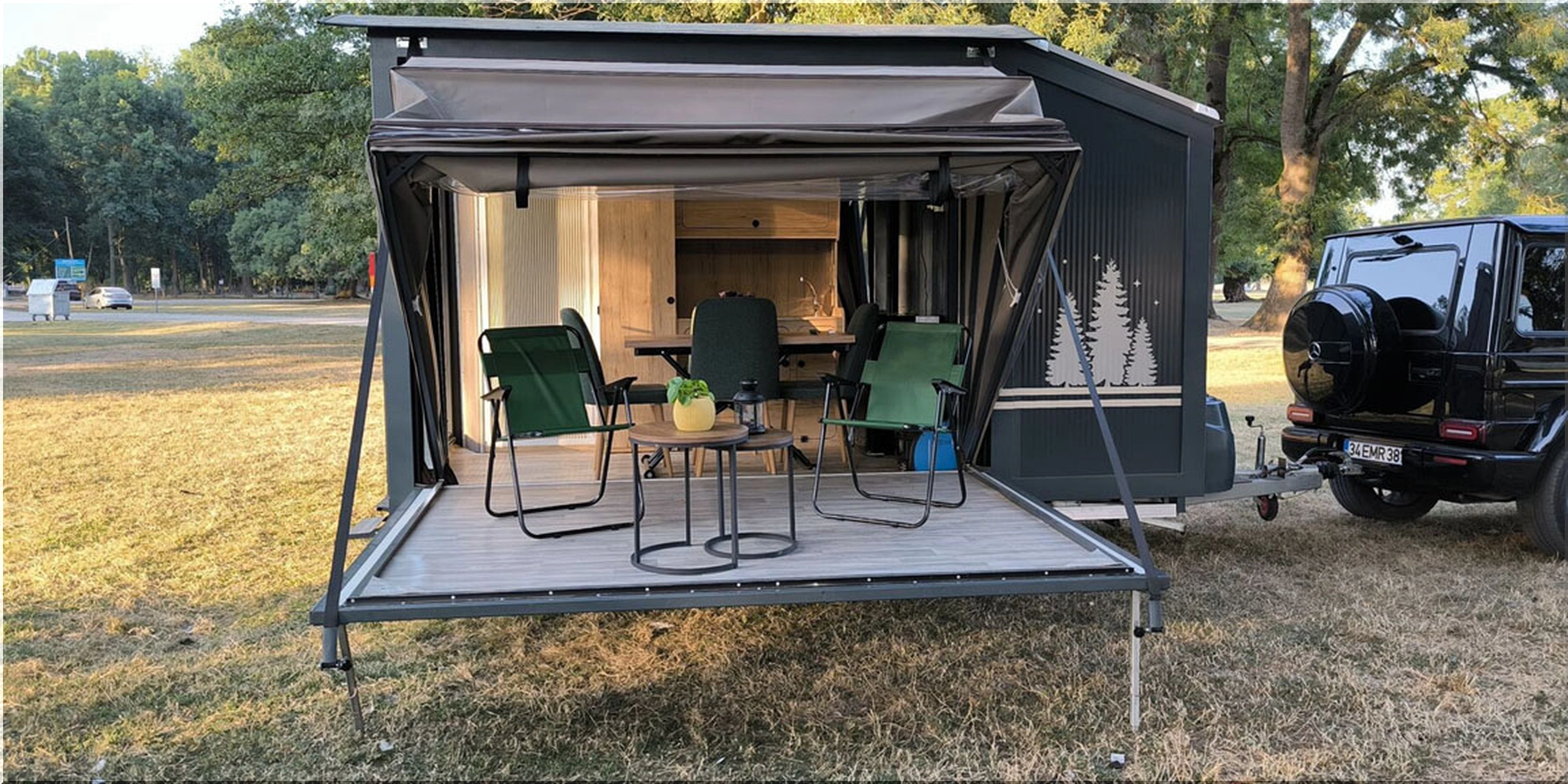
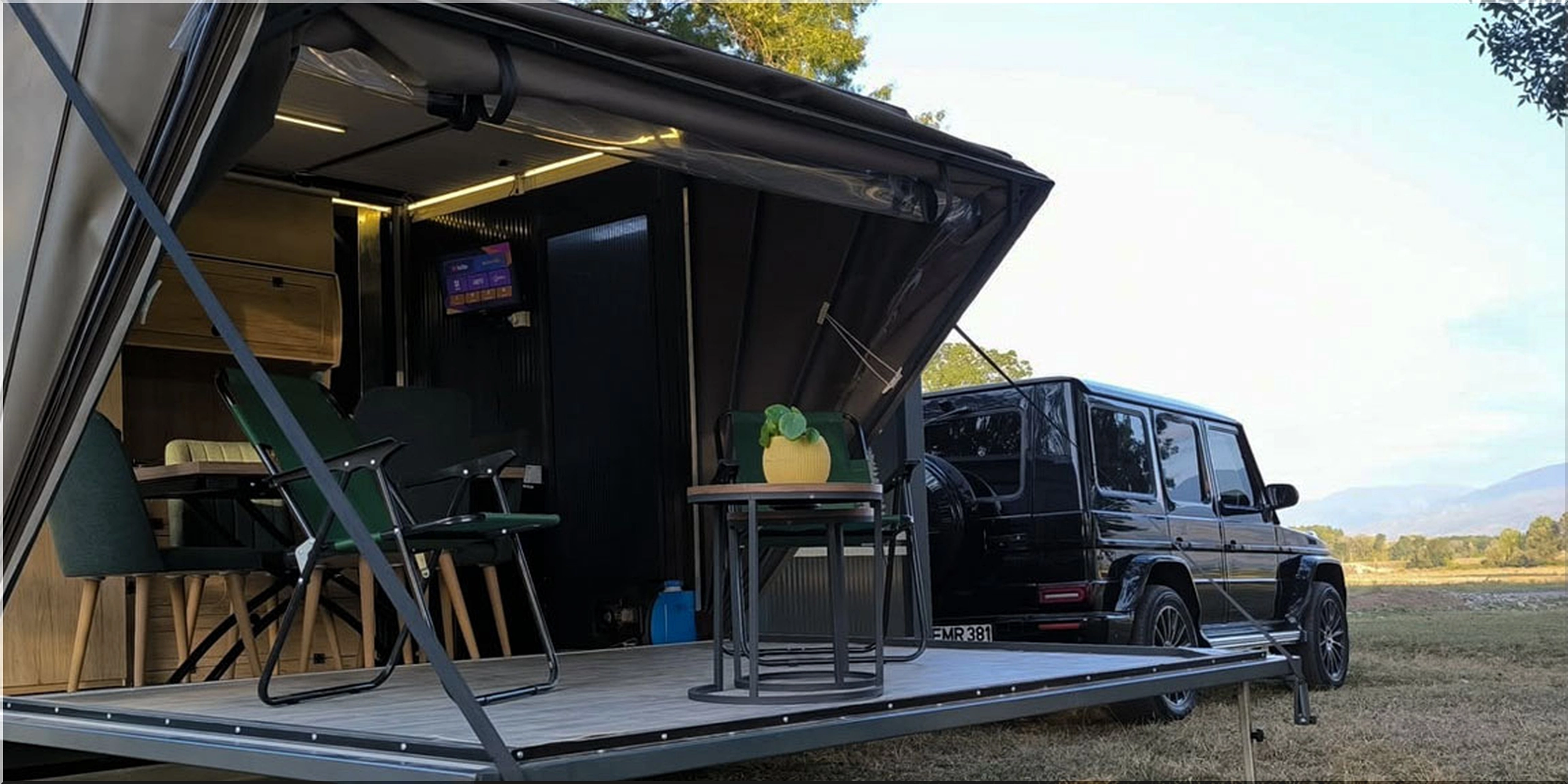
The Ortsan Mini House comes from Turkish manufacturer Örtsan, a company better known for enclosed outdoor systems and mobile shelter products. This trailer, though, has a neat party trick. It travels as a compact single-axle caravan, then opens from the sides like an accordion at camp.
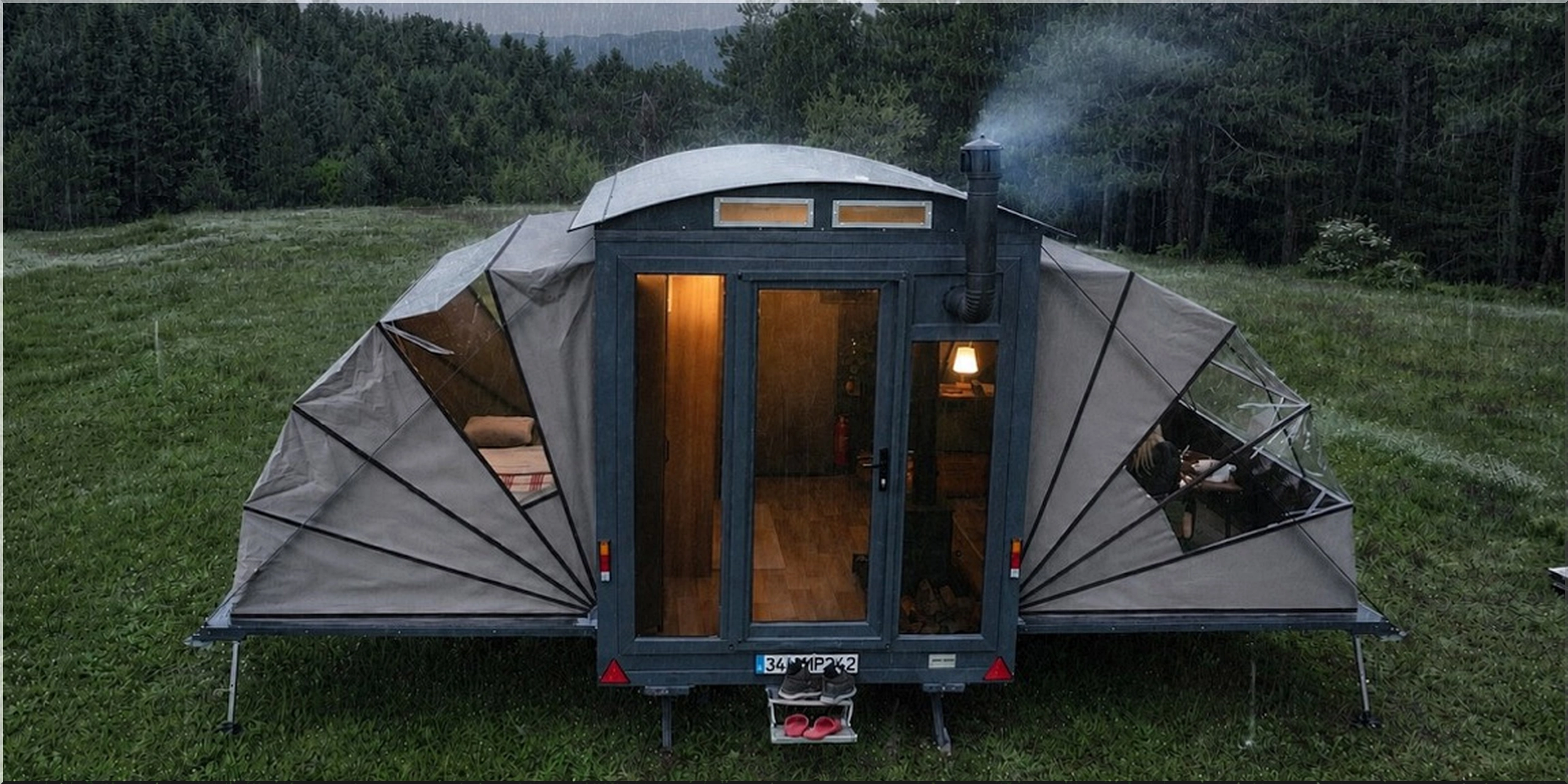
That idea makes sense. Many buyers want a camper that does not demand a large tow vehicle, a storage barn, or the turning radius of a ferry. They also want space once they arrive. Most compact trailers solve one problem while creating another. They tow easily, then feel like a hallway with pillows.
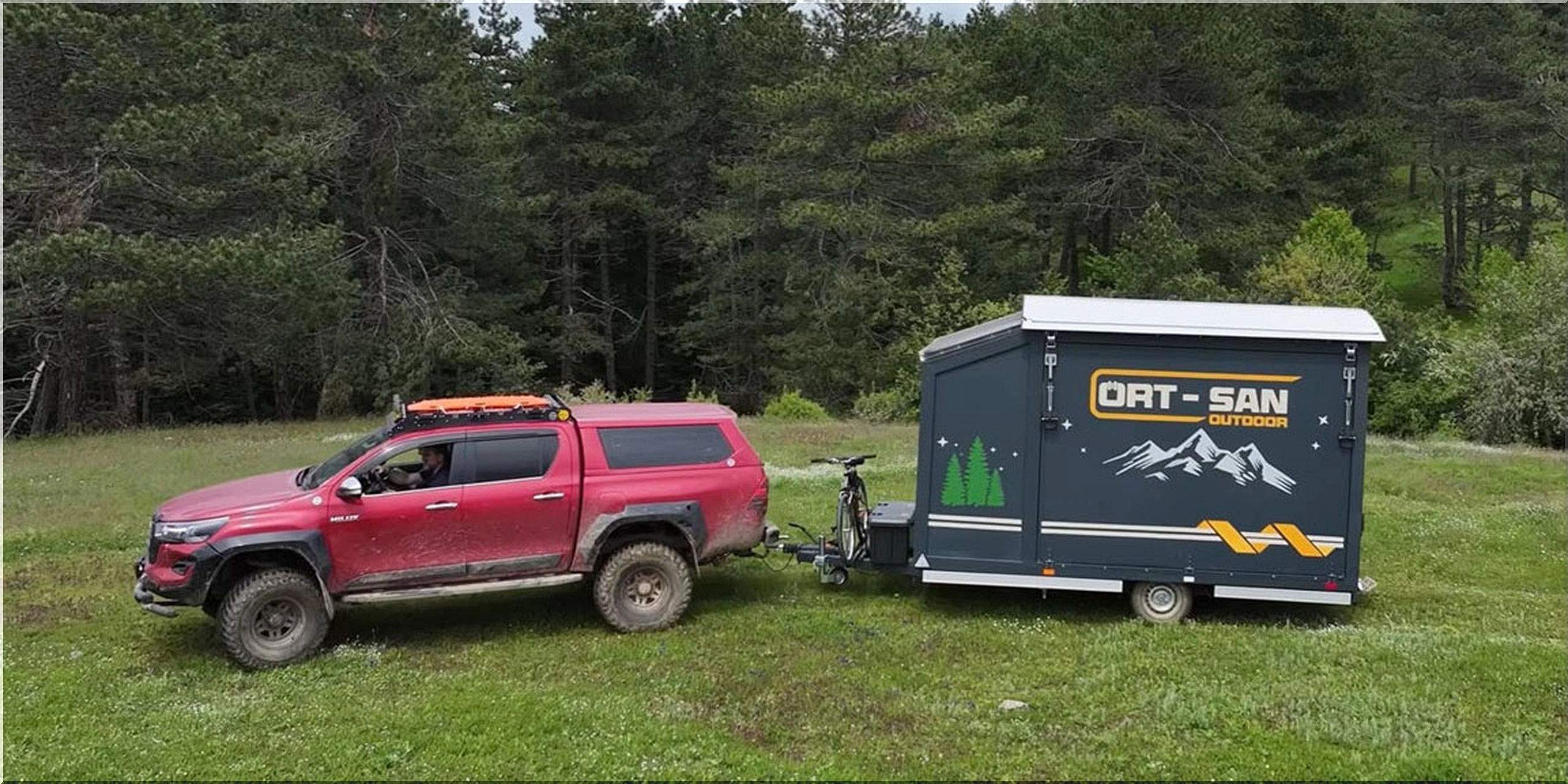
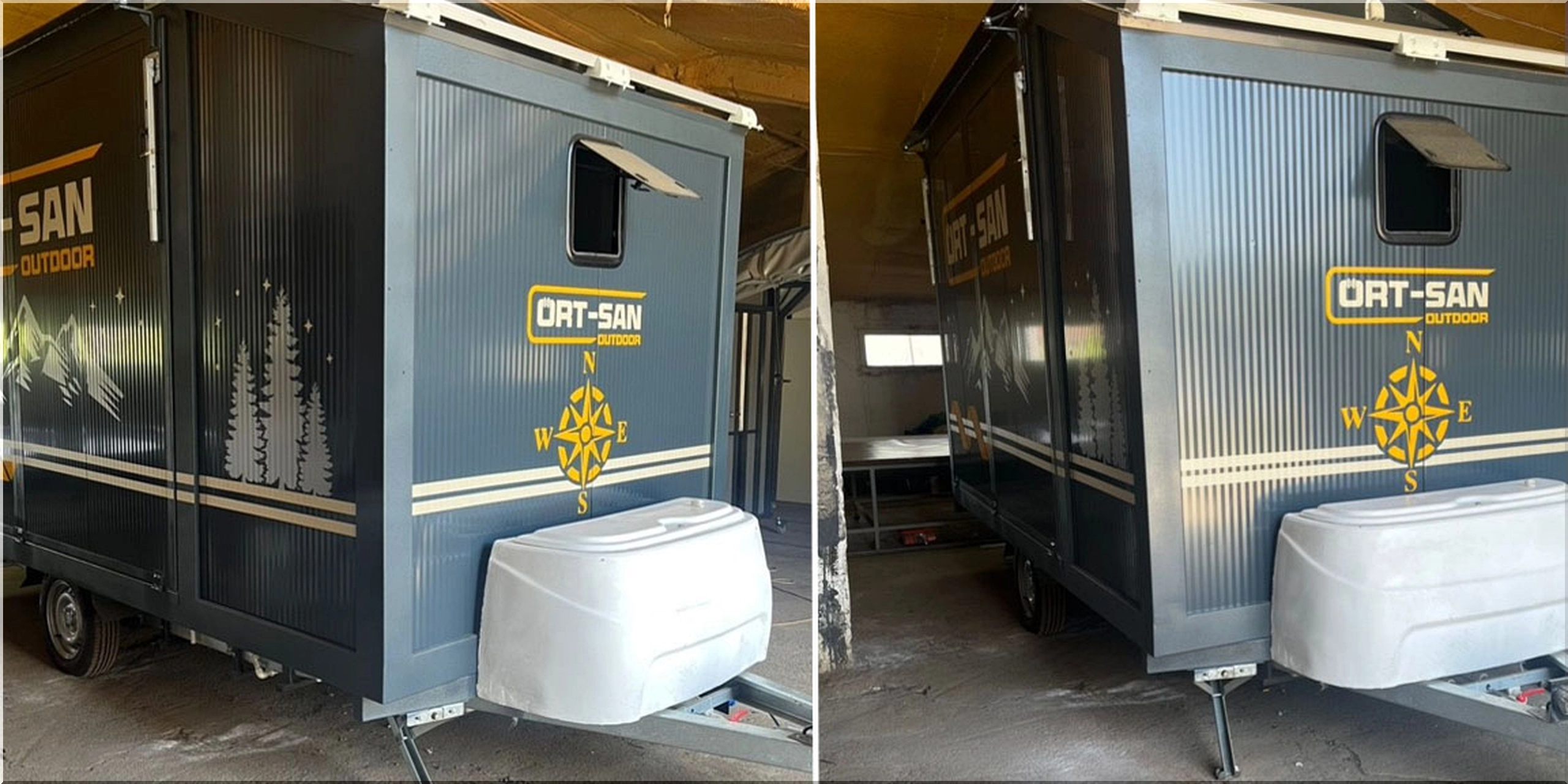
The Mini House attacks that trade-off directly. In travel mode, it measures 4.00 meters long and 2.10 meters wide, or about 13.1 feet by 6.9 feet. That gives it a road footprint of 8.4 square meters, or about 90 square feet. Once parked, its folding side sections open outward and create a living area of about 20 square meters, or roughly 215 to 219 square feet, depending on the measurement source.
That jump changes the whole feel. You no longer get a narrow camper tube. You get a small cabin with zones.
What Makes This Accordion Camper Different
The Mini House uses folding sidewalls, fabric enclosures, and an automated expansion system. Örtsan calls out remote-control integration for the opening setup, which gives the trailer a push-button feel rather than a wrestling-match-with-poles feel. Campers who have ever assembled an awning in wind will understand the appeal.
The structure rides on a single-axle trailer and carries O2 certification for international transport and road standards. That detail counts because expandable campers can look clever in photos yet get complicated once road rules enter the chat. A road-ready design gives the Mini House a stronger case as a usable product, not a fairground concept wearing hiking boots.
Key Ortsan Mini House Specs
| Feature | Detail |
|---|---|
| Travel length | 4.00 meters / 13.1 feet |
| Travel width | 2.10 meters / 6.9 feet |
| Travel footprint | 8.4 square meters / about 90 square feet |
| Expanded living area | About 20 square meters / roughly 215 to 219 square feet |
| Chassis | Single-axle trailer |
| Road certification | O2 certified |
| Fresh water tank | 200 liters |
| Wastewater tank | 200 liters |
| Solar system | 470-watt roof solar setup |
| Battery | 200Ah lithium battery |
| Official listed price | 890,000 Turkish lira, about $19,250 before VAT and transport |
The price needs context. Örtsan lists the Mini House at 890,000 Turkish lira, excluding VAT and transport. Using recent exchange rates near 46.27 Turkish lira to $1, that converts to roughly $19,250. Taxes, shipping, options, and market-specific costs could change that figure fast. Tiny homes have a talent for starting cheap and ending with invoices that look well-fed.
Inside the Ortsan Mini House
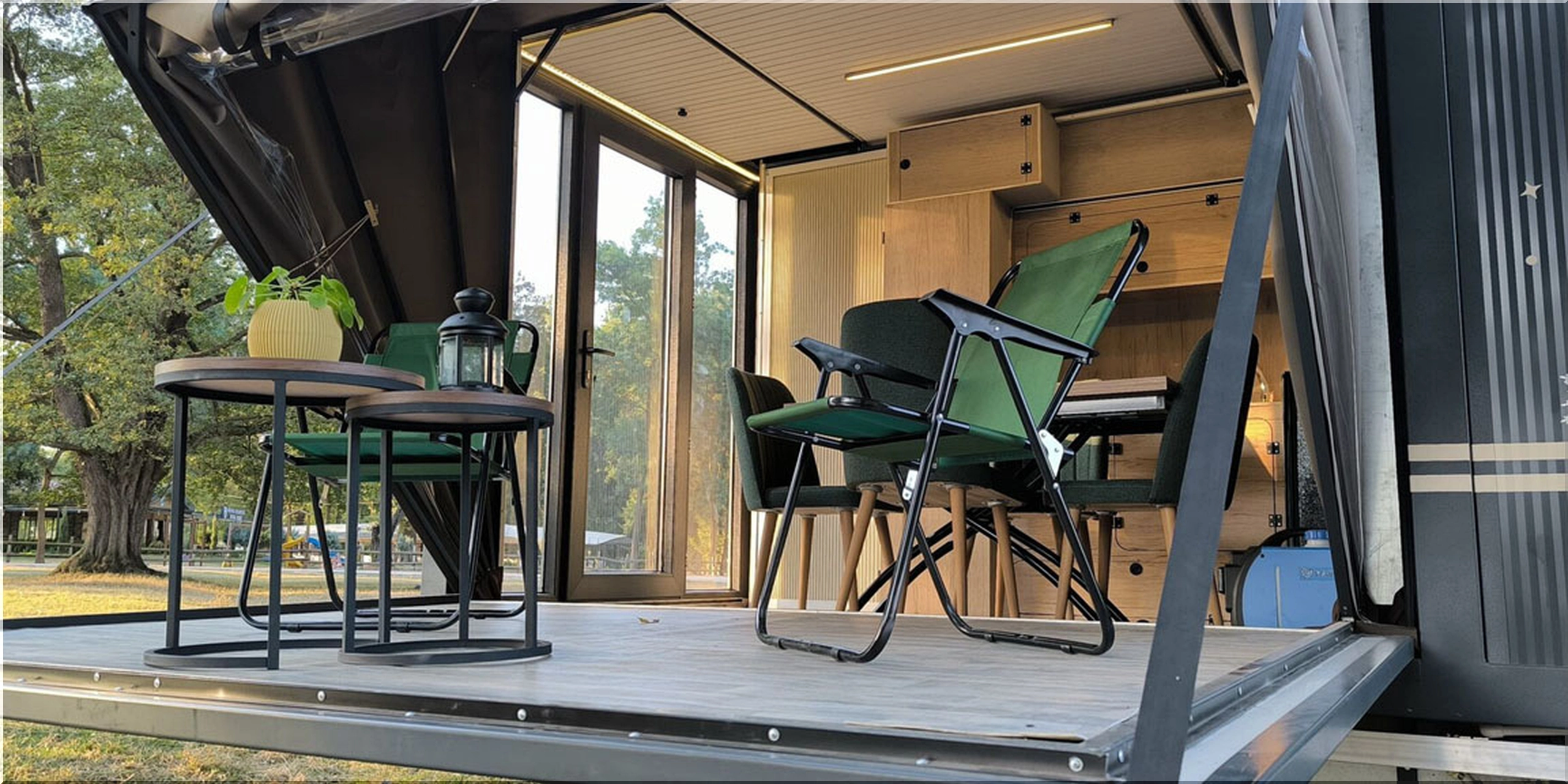
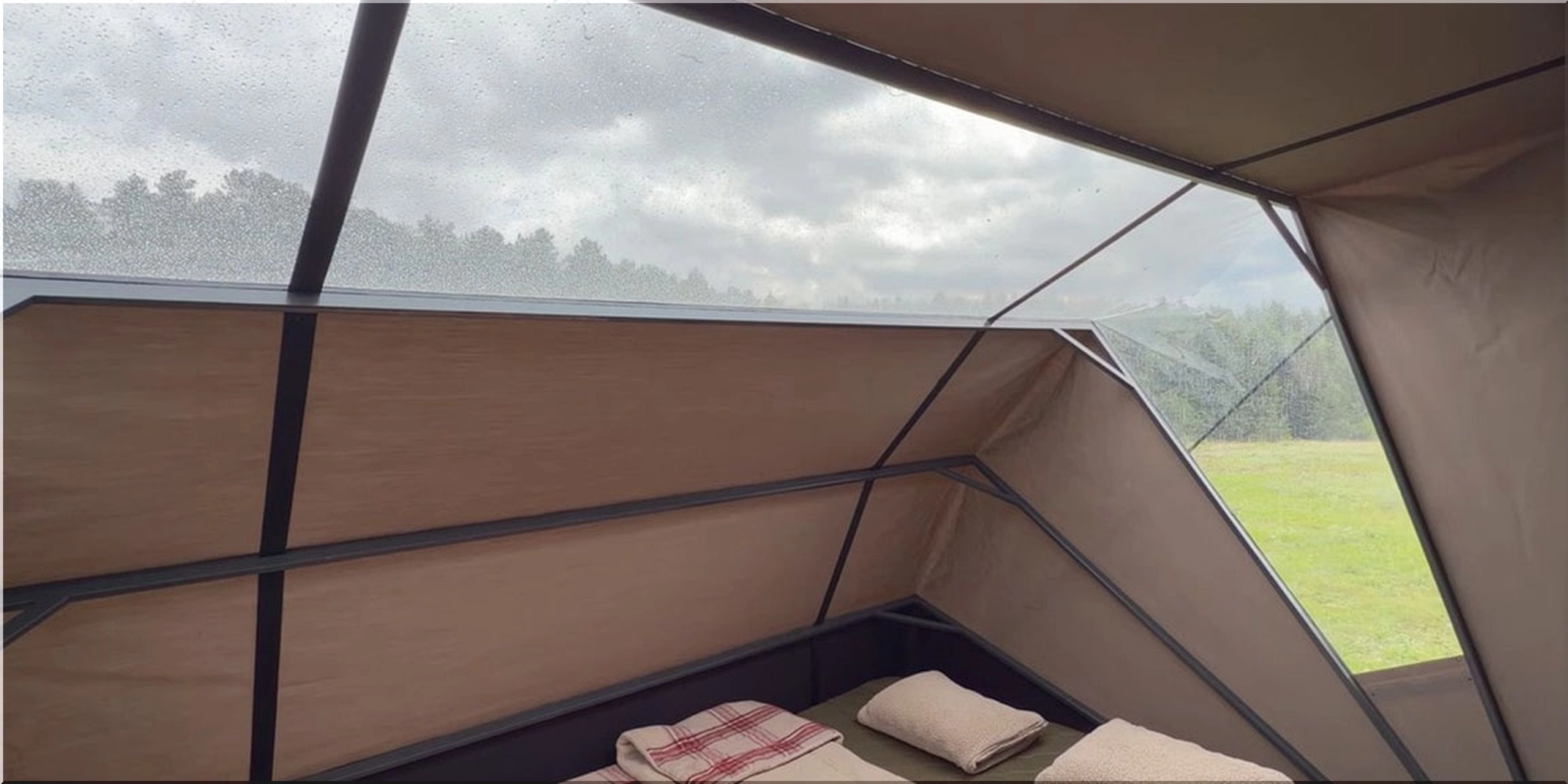
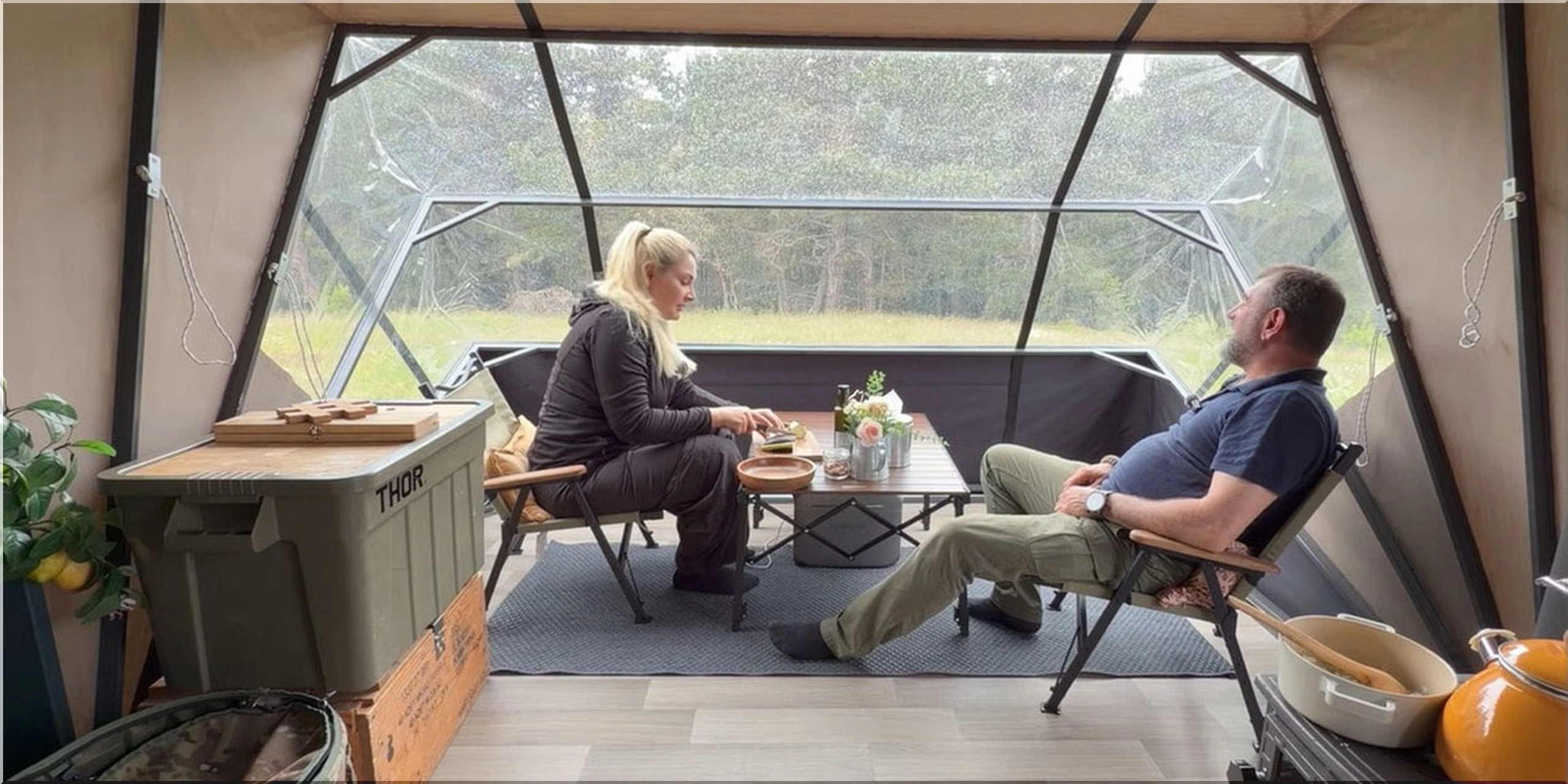
The expandable caravan splits its small footprint into practical zones. One end houses a bedroom. Another section creates a sitting area that can act like a lounge or terrace-style space when the camper opens. Up front, the trailer includes a bathroom with toilet, sink, and washing facilities.
That layout gives the Mini House an advantage over many micro campers. Instead of forcing sleeping, cooking, bathing, and sitting into one long strip, it lets each activity claim a small territory. That sounds ordinary in a house. In a 13-foot trailer, it feels almost decadent.
Kitchen Setup
The kitchen runs along much of the interior, and it offers more than a token burner next to a sink. Reported and official equipment includes:
- 90-liter refrigerator
- Gas cooktop with two burners
- Stainless-steel sink
- Functional countertop area
- Push-to-open storage drawers and cabinets
- Slide-out table
- Multimedia setup with integrated television equipment
A real kitchen matters in a compact camper because bad weather has opinions. Cooking outside sounds charming until rain arrives sideways and your dinner turns into a damp negotiation with a pan. The Mini House gives owners a better chance to cook indoors without bumping elbows into every wall.
Bathroom and Water Storage
The bathroom sits at the front of the trailer. The Mini House also carries 200 liters of fresh water and 200 liters of wastewater capacity, according to Örtsan. That gives it better off-grid potential than many compact campers that rely on tiny tanks and big optimism.
The cassette toilet still needs regular emptying. Romance lives elsewhere. Practical travel requires some unglamorous chores, and this camper does not escape that rule.
Off-Grid Gear: Solar, Battery, Heat, and Climate Control
The Ortsan Mini House off-grid camper packs a roof-mounted 470-watt solar panel system, a 200Ah lithium battery, and an inverter. That setup should support basic power needs during short stays, though real endurance depends on sunlight, weather, device use, heating, cooling, and personal habits.
The Mini House also includes climate equipment that broadens its use case:
- Air-conditioning system for warm-weather camping.
- Webasto diesel heater for cold nights.
- Wood-burning stove for added heat and cabin charm.
- Tablet-based control center for lights, heating, cooling, and expansion functions.
That last point gives the camper a modern feel. A tablet controller sounds fancy, but it has a practical role. In a compact, folding design, simple control access reduces fuss. Nobody wants to hunt for switches while standing half-inside a camper that still needs to finish becoming a room.
The Big Win: Small on the Road, Roomy at Camp
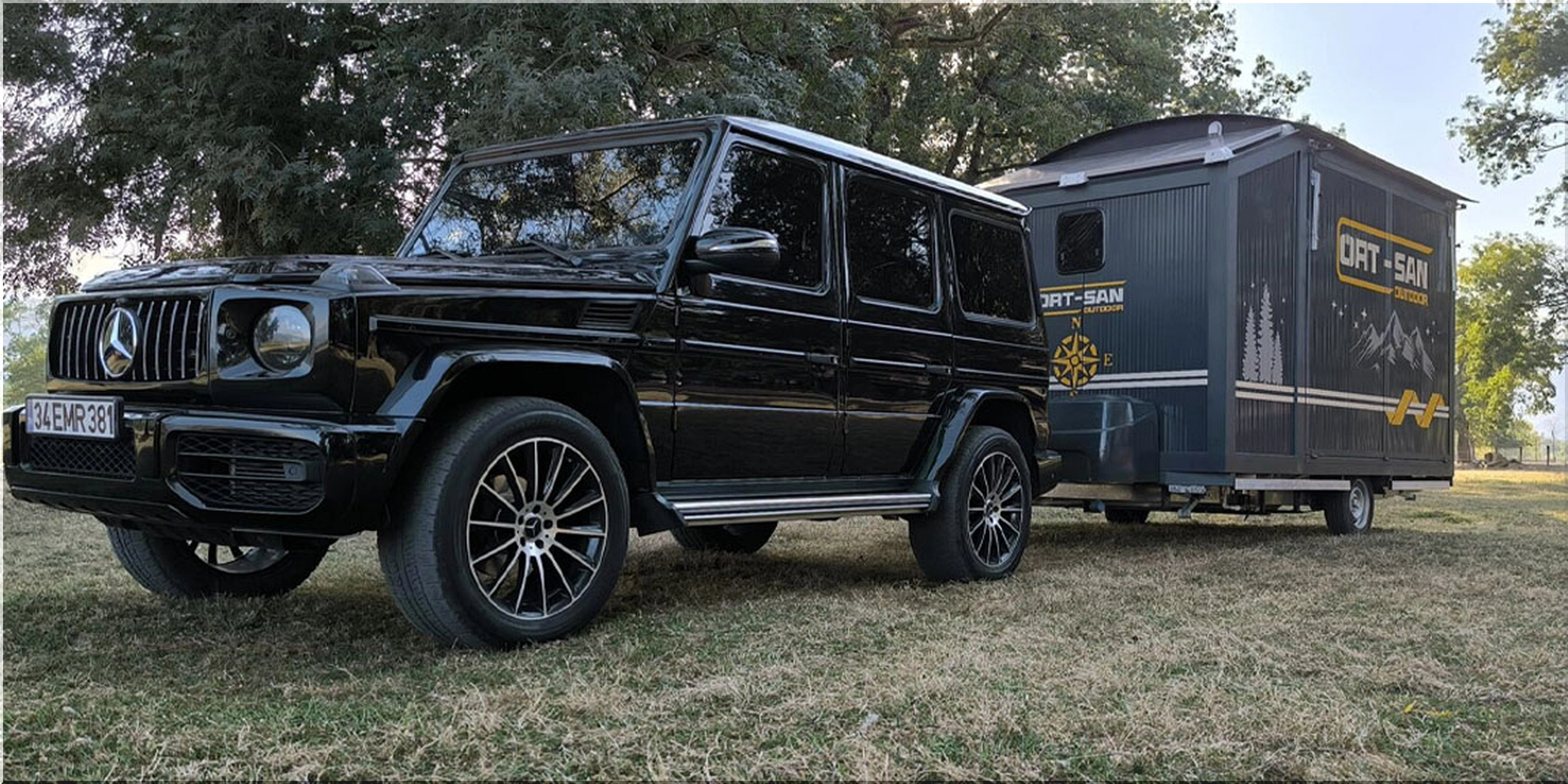
The Mini House earns attention because it solves a buyer problem with one strong idea. Tow small. Live larger.
A compact travel size helps with storage, tight roads, fuel use, and parking stress. The expanded footprint helps with daily life at camp. That makes the trailer more appealing for people who want a small off-grid camper but do not want to sleep, cook, and change clothes inside a closet with curtains.
This setup could suit:
- Weekend campers who want extra room without buying a large RV
- Couples who need a proper bed, bathroom, and kitchen
- Remote workers who want a small mobile cabin for short stays
- Campsite owners seeking rentable tiny cabins with towable flexibility
- Outdoor buyers who want solar support and water storage in a compact package
It could also attract tiny house fans who like the idea of downsizing, but still enjoy doors, zones, and a fridge that can hold more than three yogurts and regret.
The Trade-Offs Buyers Should Think About
The accordion layout makes the Mini House clever. It also creates limits. Folding walls and canvas sections bring a more tent-like feel than a rigid tiny home. That can suit campers who enjoy nature. It may annoy buyers who want full hard-wall insulation and zero flapping noises during bad weather.
Storage also requires care. Fold-out sections need to close cleanly, so owners will need to keep those areas clear before travel. In plain language: you may own a smart camper, but you still need to pick up your socks.
Setup time also counts. Örtsan uses an automated expansion system, yet owners still need to level the trailer, check the site, manage utilities, and secure the expanded sections. A traditional small trailer may allow faster camp setup. The Mini House gives more room, but asks for a little more attention.
Smart Questions Before Buying
Ask these before placing an order:
- What tow rating does my vehicle have, including payload and tongue weight?
- What does the finished trailer weigh with options, water, battery, and gear?
- How does the fabric enclosure handle wind, rain, and long-term sun exposure?
- What warranty covers the expansion system, battery, solar hardware, and heater?
- Can local service shops repair the folding mechanism and electrical systems?
- What does shipping cost, and who handles import paperwork?
- Does the final price include VAT, delivery, registration, and any required inspection?
These questions may sound boring. Good. Boring questions save expensive surprises.
How the Mini House Compares With a Regular Tiny House
A tiny house usually gives more solid construction, more insulation, and stronger year-round living potential. It also brings towing limits, road width concerns, higher weight, and bigger storage needs.
The Mini House goes in another direction. It acts like a compact caravan first and a tiny cabin second. That makes it less permanent, but much easier to move.
A fixed tiny house may suit long-term living. The Mini House suits shorter stays, flexible travel, and campsites where compact transport size matters. It gives buyers a way to enjoy cabin-style space without towing a full-size trailer every time they want a weekend away.
That distinction matters for searchers comparing a tiny house on wheels with an accordion camper trailer. The Mini House does not try to replace a full residential tiny home. It targets the gap between a tent trailer and a small RV, then adds solar, water tanks, and a proper interior.
Design Roots: A Smart Idea With Older Inspiration
Expandable campers have history. Dutch architect Eduard Böhtlingk created the De Markies concept in the 1980s, using fold-out sides to create a much wider campsite footprint. That project became a design reference point, but it never reached wide production.
The Mini House brings a similar space-saving idea into a product that buyers can actually order. That difference matters. Concept campers often look brilliant under studio lights. The stronger test comes when someone has to tow one, park one, clean one, heat one, and pay for one.
Örtsan appears to understand that test. The Mini House includes ordinary travel necessities rather than relying only on the folding trick. Solar panels, water tanks, heating, cooling, a bathroom, and a real kitchen help turn the design from clever object into usable camper.
Who Should Consider the Ortsan Mini House?
The Ortsan Mini House makes the most sense for buyers who want compact towing and expanded campsite living. It suits people who care about space efficiency, off-grid basics, and a less conventional camper layout.
It may not suit buyers who want a low-effort, hard-wall RV with instant setup and large storage bays. It may also feel too tent-like for owners who camp in harsh weather or noisy campgrounds. Canvas sections can add charm, but charm does not block every gust.
For the right buyer, though, the appeal feels clear. The Mini House shrinks the road problem and grows the living space problem. That is a neat trick.
Practical Next Steps
Start with the towing numbers. Then ask Örtsan for the final weight, full options list, warranty terms, delivery cost, and delivery timeline. Confirm the exact included equipment because small campers often vary by market and build slot.
Next, compare the Mini House against a pop-up camper, a teardrop trailer, and a small hard-sided caravan. Price the full package, not the base unit. Include taxes, shipping, registration, insurance, accessories, and any charging or solar upgrades.
The Ortsan Mini House will not fit every camping plan. But for buyers who want a compact trailer that opens into a surprisingly livable off-grid tiny cabin, it offers one of the more interesting small-camper ideas right now. It packs smart space, useful equipment, and just enough theatrical flair to make neighboring campers glance over and pretend they were not staring.
- Add new comment
- 224 views