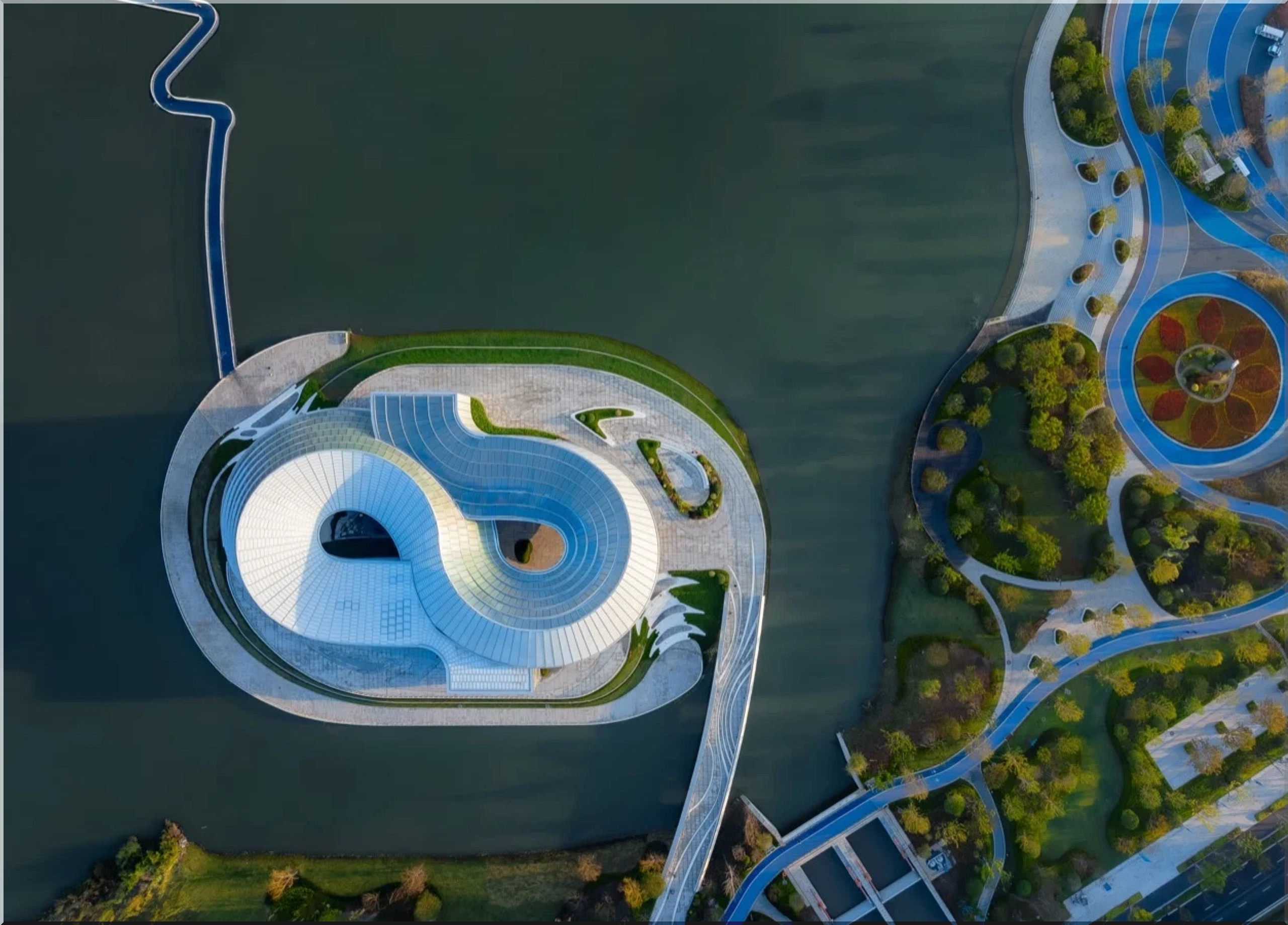
A museum needs somewhere to display art. Whether it also needs to resemble two enormous jade bracelets depends on whom you ask. At Yohoo Museum in Hangzhou, Aedas makes a persuasive case.
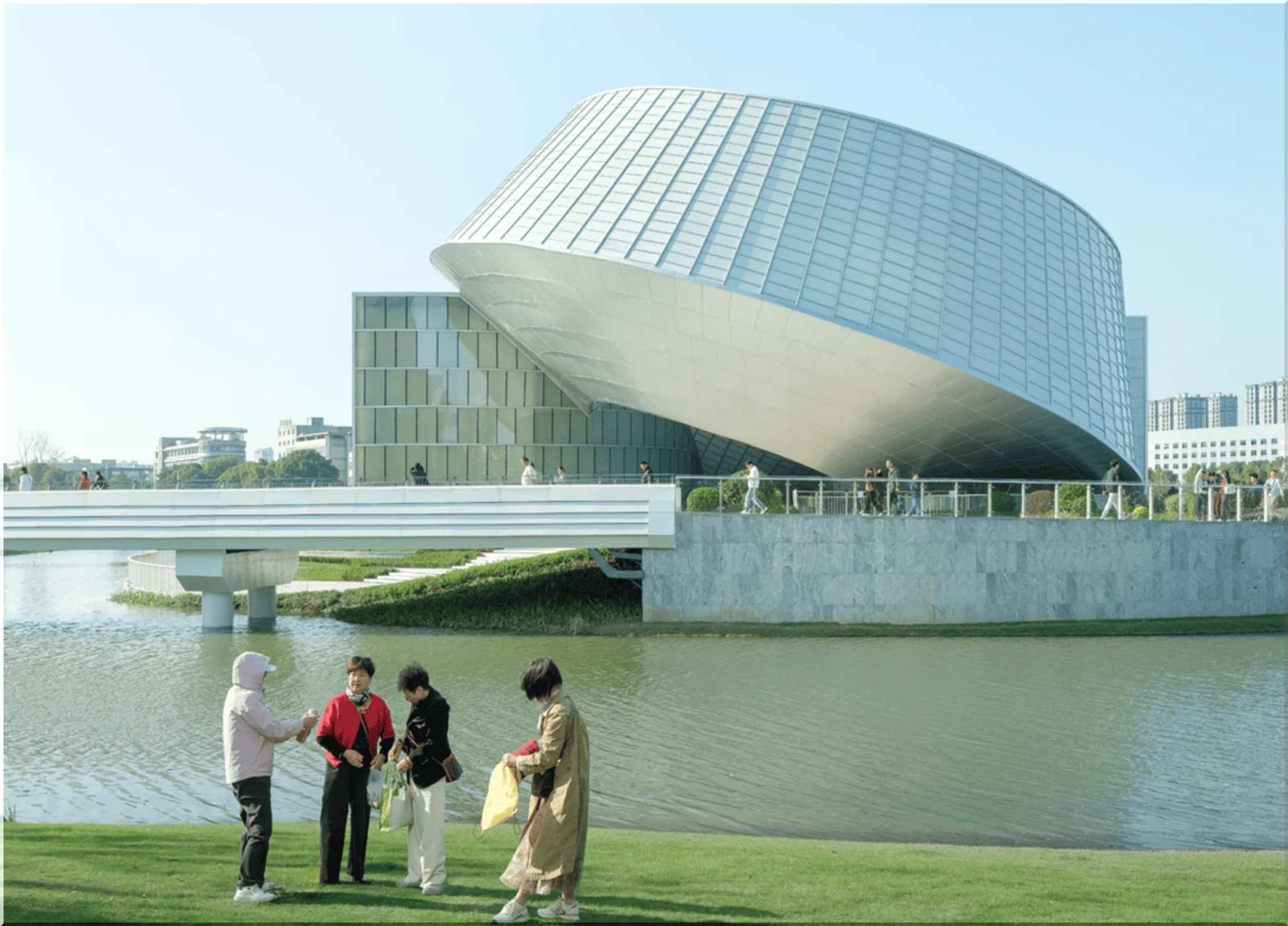
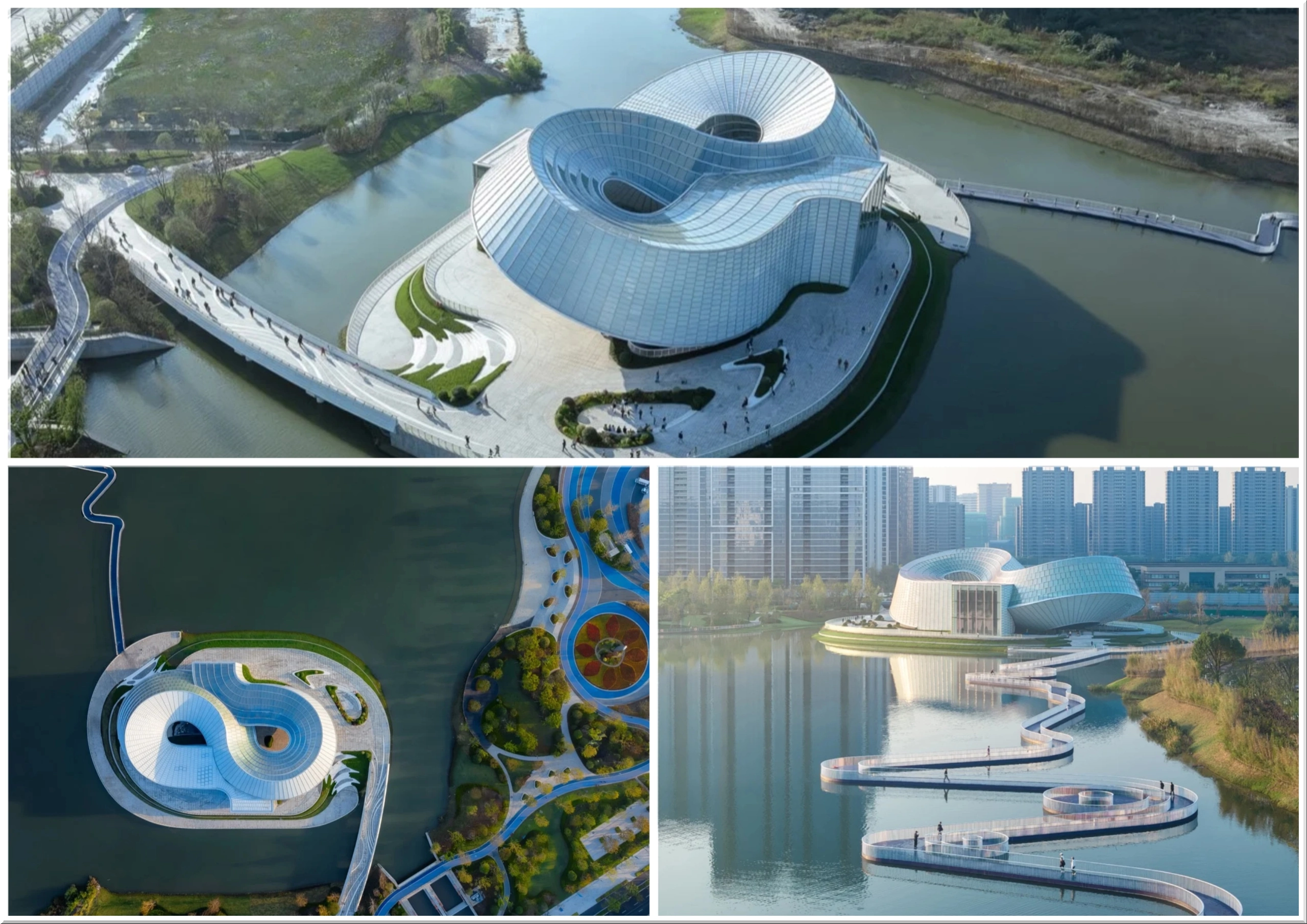
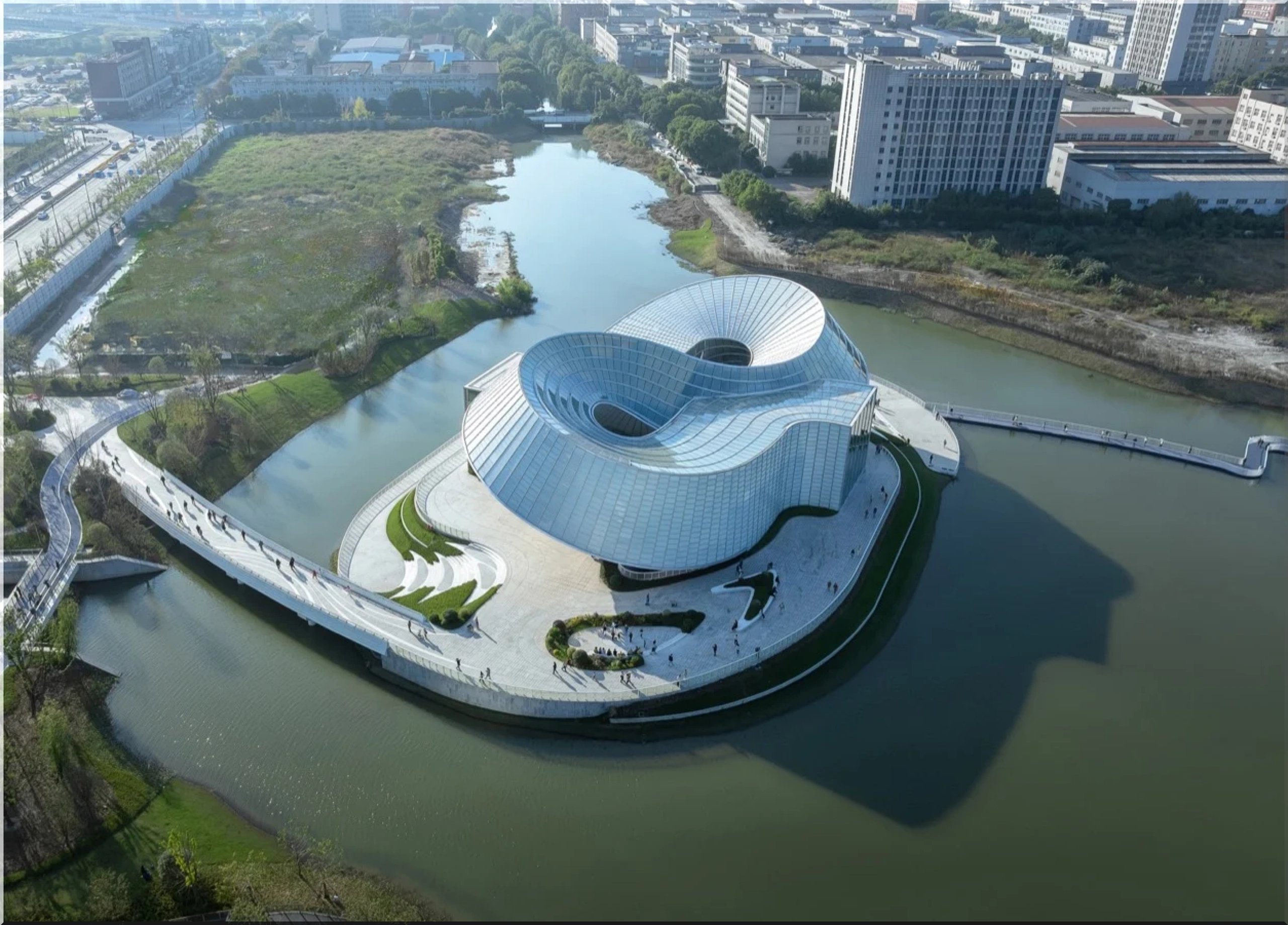
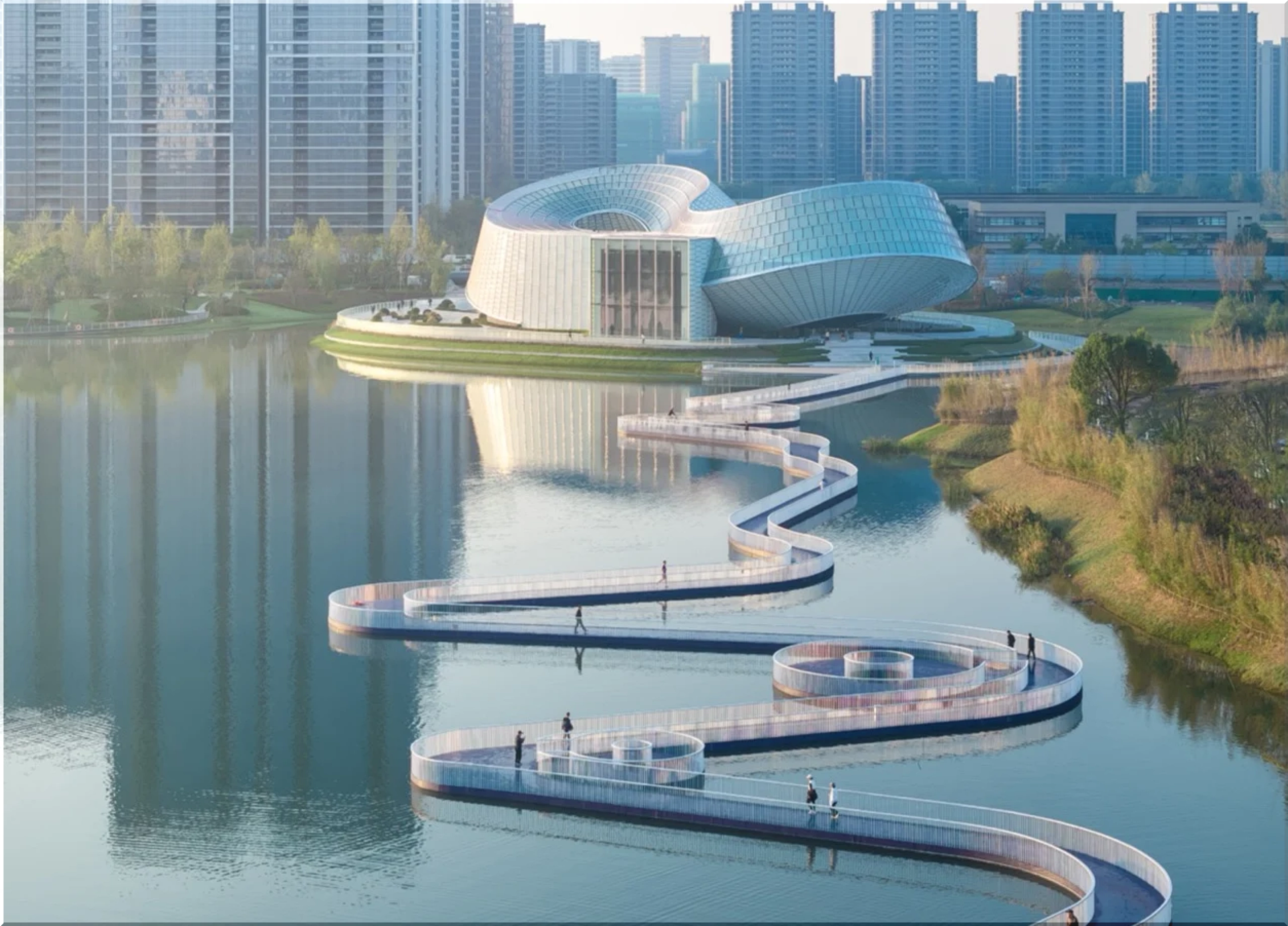
Two interlocking glass rings rise above a lake in Liangzhu Yohoo Park. Their edges lift to shelter public gathering spaces, while their curved surfaces catch the light. The building commands attention without requiring a marble staircase and an intimidating person behind a desk.
Ancient Jade Gives the Design Its Shape
Aedas completed the 57,650-square-foot (5,356-square-meter) museum in 2024. Global Design Principal Ken Wai led the design, with POWERCHINA Huadong collaborating on the project.
The rings draw inspiration from ceremonial jade objects associated with Liangzhu culture, which flourished in the region roughly 5,000 years ago. Aedas uses their interlocking arrangement to symbolize the connection between Liangzhu heritage and the Grand Canal.
Architectural symbolism can demand considerable patience from the public. Fortunately, this version works without a lengthy explanation. The rings frame courtyards, organize the building, and produce a recognizable silhouette.
Visitors can appreciate the curves before discovering what they mean. Nobody needs to complete the assigned reading.
Emerald Glass Does More Than Look Expensive
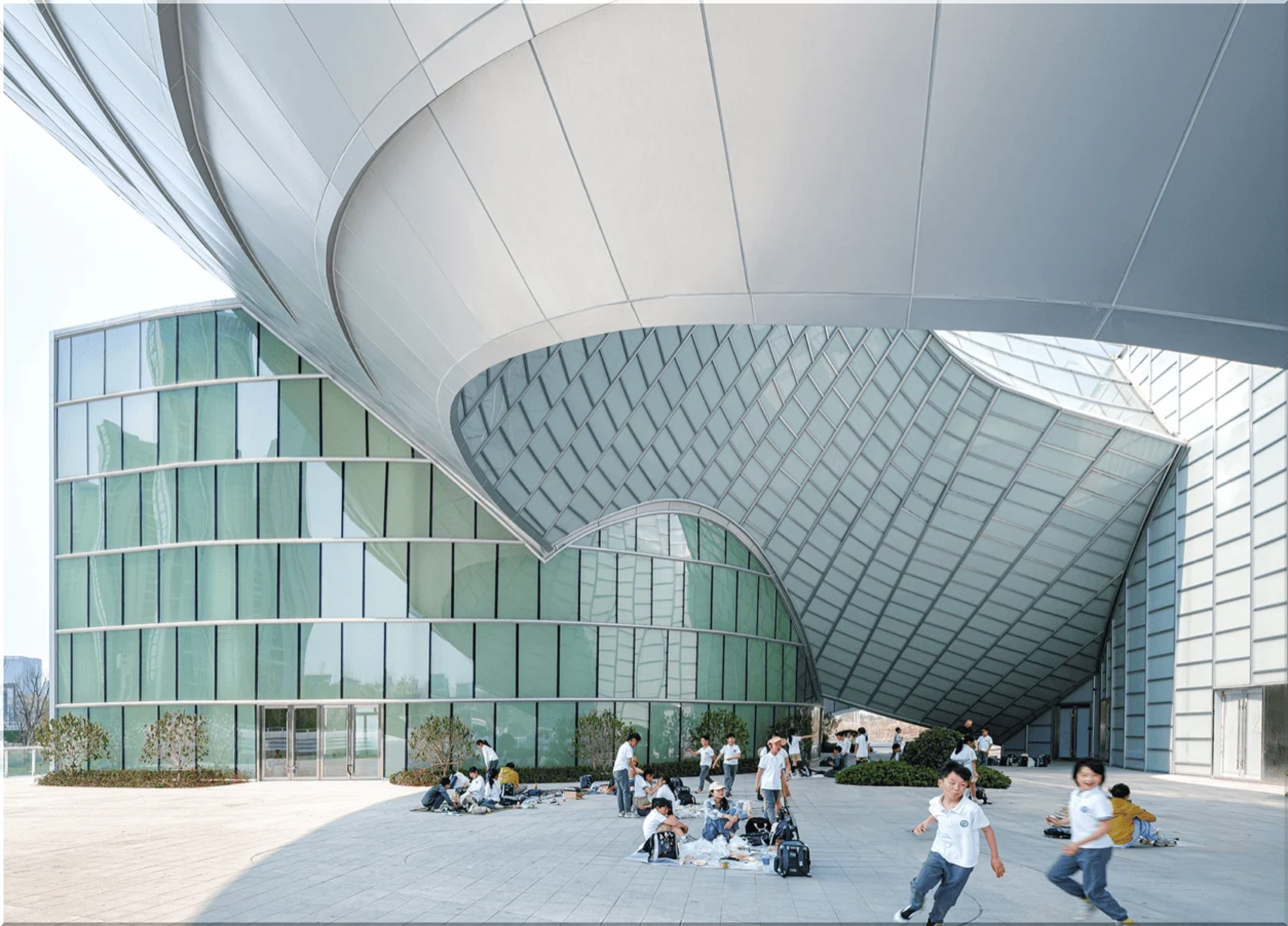
The southern entrance features multilayer laminated glass, which Aedas calls 'emerald glass.' Its translucent surface softens incoming daylight and gives the facade a jade-like appearance.
On the northern side, larger transparent panes open views toward the surroundings and reveal portions of the interior. The building therefore changes character as visitors move around it.
Three decisions give the glazing a purpose:
- Translucent glass softens the quality of incoming light.
- Transparent sections connect interior spaces with the waterfront.
- Jade-toned surfaces reinforce the cultural reference through material and color.
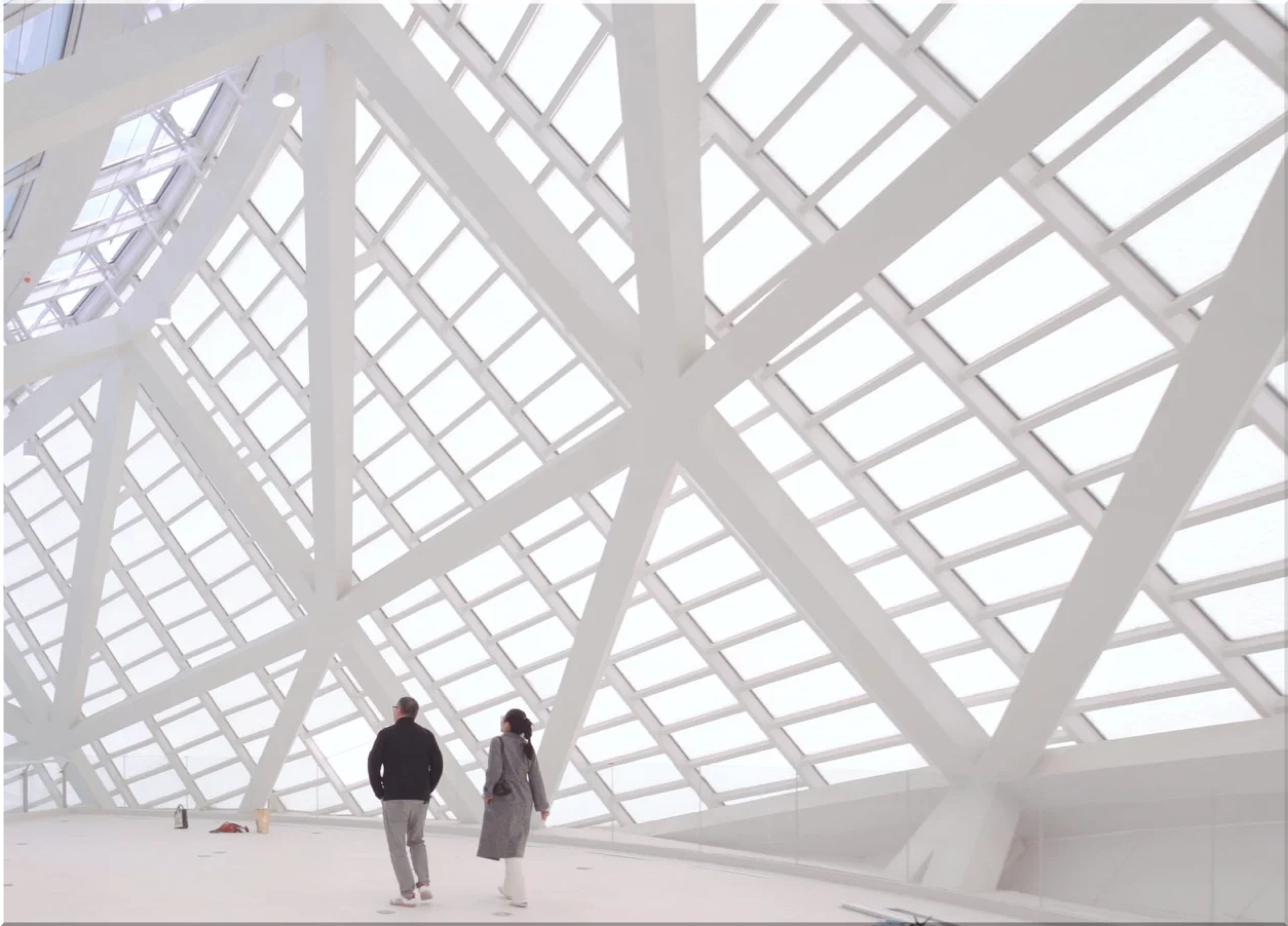
The photographs show luminous spaces. They cannot establish energy efficiency or protection for sensitive artworks. Glass, regrettably, does not acquire excellent technical performance simply because someone photographs it beautifully.
The Steel Frame Creates Space for Everyone
A steel frame allows opposite edges of the museum to rise above the ground, forming sheltered outdoor areas beneath the curves.
Here, the structural drama delivers a practical benefit. The overhangs create places for conversation, recreation, and an unhurried look across the water. They extend the museum's usefulness beyond its exhibition rooms.
That deserves attention. Cultural buildings often excel at providing impressive backgrounds for photographs. Yohoo also supplies somewhere to stand while the person taking yours insists on another angle.
The International Design Awards named the project Architectural Design of the Year and awarded it Gold in the Cultural category. The sheltered public spaces make a quieter, equally convincing argument for its success.
Why This Matters to You
You probably have no immediate plans to commission an island museum. The underlying design lesson still applies at home: ask what an architectural feature does for daily life.
An overhang should provide useful shelter. A window should frame a worthwhile view. A distinctive material should contribute something beyond an interesting invoice.
Pro-Tip: Study the museum from several viewpoints, including beneath its lifted edges. Notice how the approach, reflections, and sheltered spaces shape the experience of the waterfront.
Yohoo's strongest achievement comes from making its extravagant form useful. Five thousand years of cultural inspiration help. Somewhere pleasant to sit closes the deal.